PERMANENT-ENVIRONMENTAL-PUBLIC ART-CREATIVE CONSERVATION COLLABORATIVE-COMMISSION
TITLE: Lakebone
COMMISSIONED BY: City of Burlington, Burlington City Arts, Burlington, Vermont
TEAM: Nancy Winship Milliken, Ben Graham, Andrew Milliken
POLLINATOR HABITAT: Bee the Change
ENGINEER: John Higgins, Artisan Engineering
CONSULTANTS: Ron Anthony, Greg Ranallo, Teo Calcagni, Eliot Lothrop, Barry King
LOCATION: Main Street, Burlington, Vermont
INSTALLATION DATE: June 3, 2026. JOIN IN THE PARADE!
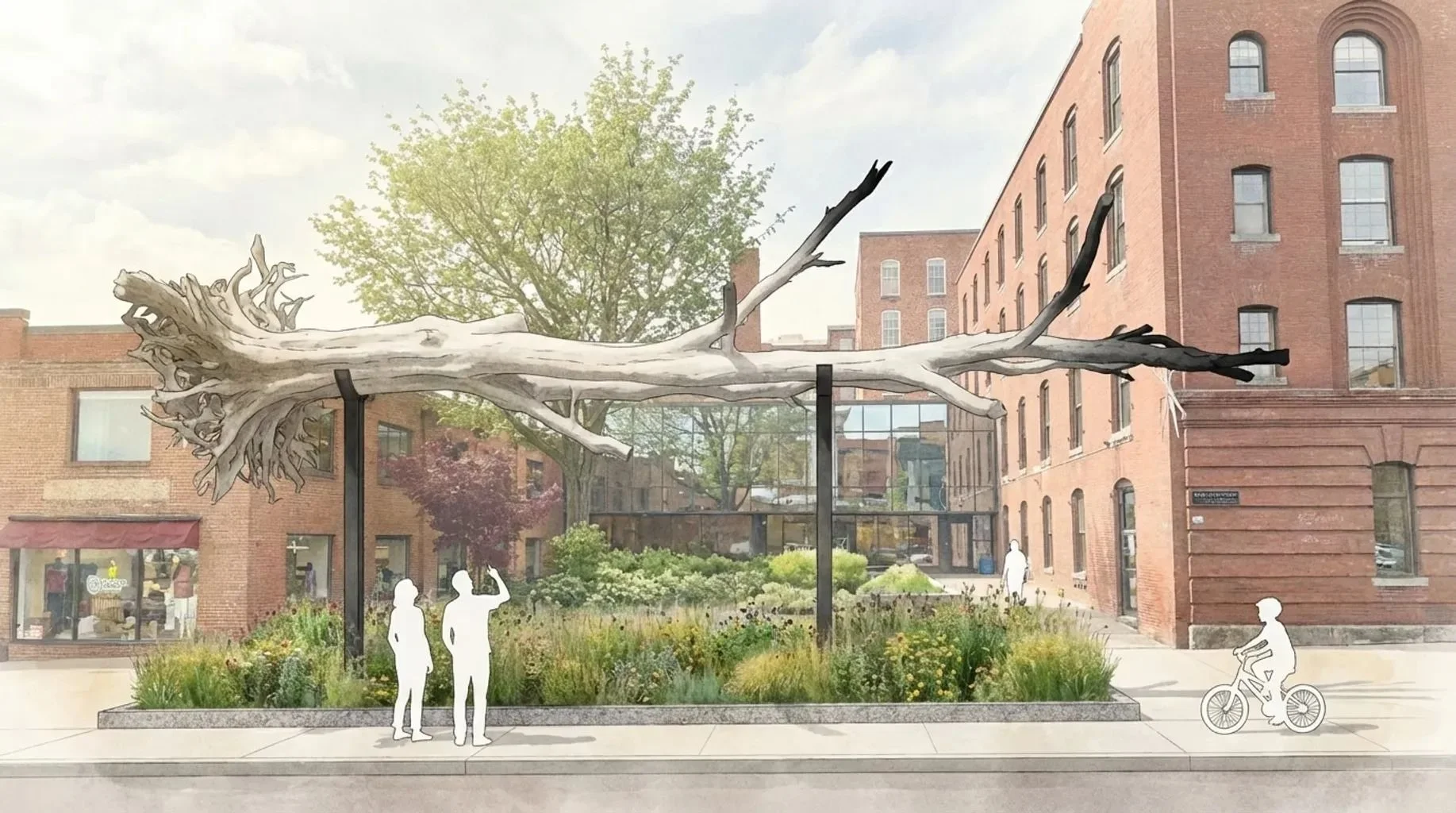
Lakebone is a large, whitened, horizontal tree suspended by steel posts over a pollinator meadow. Located on the sidewalk of downtown Burlington, Vermont, the local materials invite the city residents and visitors to experience a new relationship to the trees and fields of Vermont.
This monumental permanent public art installation honors and highlights the importance of trees in Vermont. The design of the Main Street sculpture offers the opportunity to tell two stories. One story looks back at the history of Burlington’s waterfront and the other story looks towards the future health of the lake through sustainable forestry and management of Lake Champlain tributary watersheds. In 1854, the railroad service reached Burlington and the lumber industry came to dominate Burlington’s waterfront, establishing the city as America’s third largest lumber port. The installation highlights the importance of conserving forests, native vegetation, and dead wood in riparian zones and floodplains of the Lake Champlain watershed.
POLLINATOR HABITAT DESIGN IN COLLABORATION WITH BEE THE CHANGE
A variety of heights and colors of hardy pollinator friendly plants and shrubs will be installed into the 50’ long bed.
● Pollinator habitat does more than soften the transition between the hardscape and sculpture elements, it adds a dynamism- shifting in a day, and with the seasons, like the lake, constant motion in a static landscape.
● It brings upper and lower elements in relation as stalks and vines grow towards the tree. It improves water infiltration with deep rooted plants in the rainwater collection sites working towards a cleaner lake and adds diversity to this human dominated landscape with native plants, their blossoms nodding heavily with the visiting pollinators.
● The pollinator meadow provides a natural habitat and incorporates movement (from wind and pollinators), and seasonal change to a static sculpture. It brings color to the black and white steel structure and tree. The habitat also embraces the theme of reverence for the fields of Vermont and the importance pollinators have for ecosystems and agriculture.
● The design of the meadow creates an entrance (and exit) into the installation and slows the viewer down as they witness the plants, and pollinators below and the tree above.
● Viewers, exposed to the pollinators, leads to positive experiences and that could lead to engagement in conservation efforts
CONSERVATION AND EDUCATION EFFORTS
Lakebone is a project of Creative Conservation Collaborative. There are a number opportunities to extend the reach of the installation by interpreting and educating the public about historic landscape conservation efforts.
Conservation of riparian and floodplain forests and fields in tributary watersheds of Lake Champlain (and throughout Vermont) improve water quality, increase resilience to flooding, help mitigate climate change and restore and sustain diversity of plants, wildlife and fish (or biological diversity) through connecting networks of healthy lands and waters.
Commissioned by Burlington City Arts for the Great Streets: Main Street project, this installation transforms the downtown corridor with artwork grounded in a sense of place, ecology, and community. Lakebone explores the natural and cultural histories that shape our region.
Our practice is grounded in natural materials and the rhythms of the landscape, and this work is no exception. The black locust already slated for removal was carefully harvested without damage—preserving even the root ball. The full tree was then transported to our studio, where the team removed the bark, began shaping the limbs, and launched a meticulous preservation process to ensure the sculpture will endure for decades in Burlington, Vermont
As the structure evolves in the studio, the work’s materials, forms, and textures are emerging—telling a story of our region’s lumber and environmental history while looking toward a future centered on protecting the health and sustainability of Lake Champlain. The sculpture will ultimately be installed above a specially created pollinator garden developed in partnership with Bee the Change.