PERMANENT ENVIRONMENTAL PUBLIC ART
TITLE: Lakebone
COMMISSIONED BY: Burlington City Arts, City of Burlington, VT
LEAD ARTIST: Nancy Winship Milliken
ARTIST TEAM: Ben Graham, Andrew Milliken
POLLINATOR HABITAT: Bee the Change
ENGINEER: John Higgins, Artisan Engineering
CONSULTANTS: Ron Anthony, Greg Ranallo, Eliot Lothrop, Barry King, Charlie Tipper
LOCATION: 100-110 Main Street, Burlington, Vermont
MATERIALS: wood, steel, pollinator plants
2022-2026
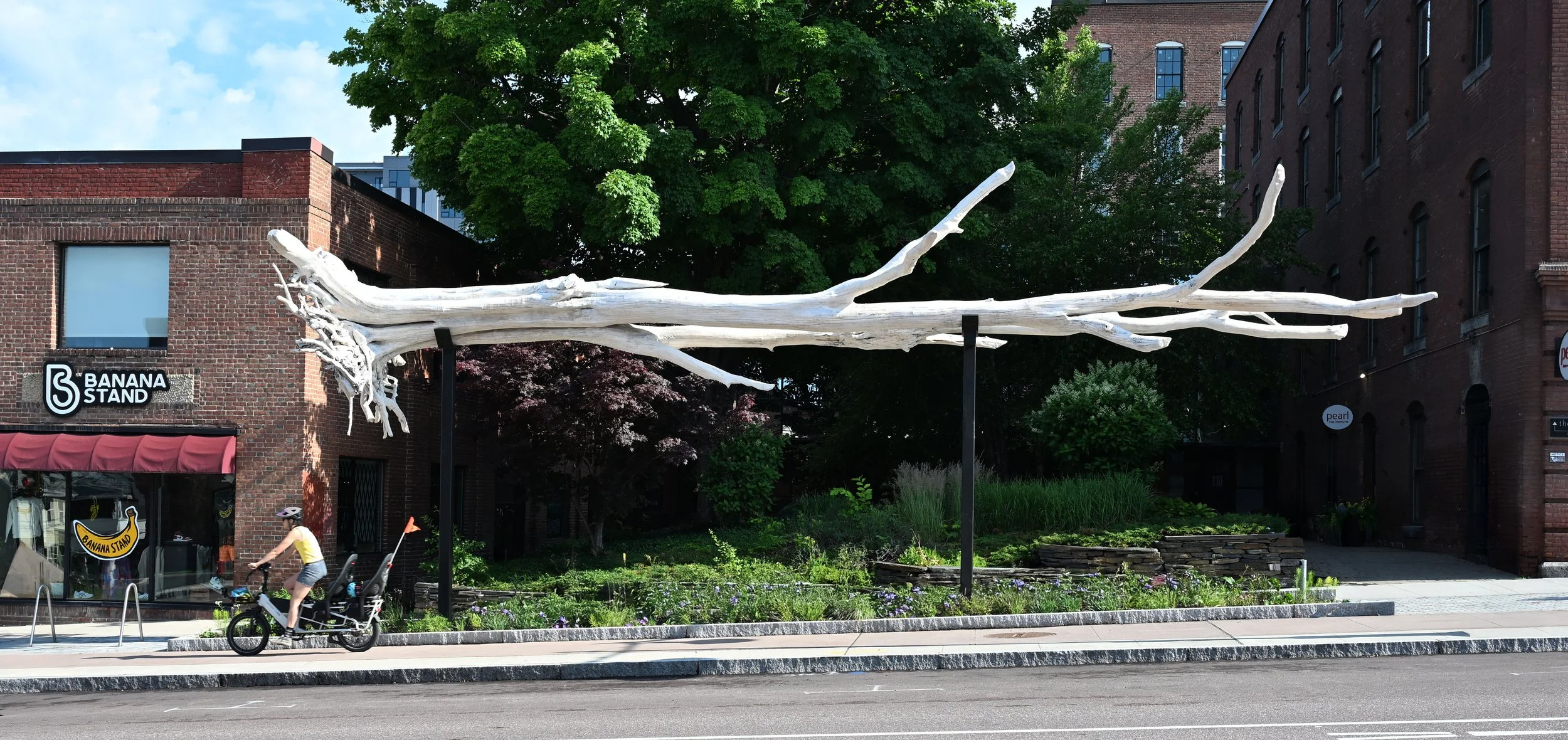
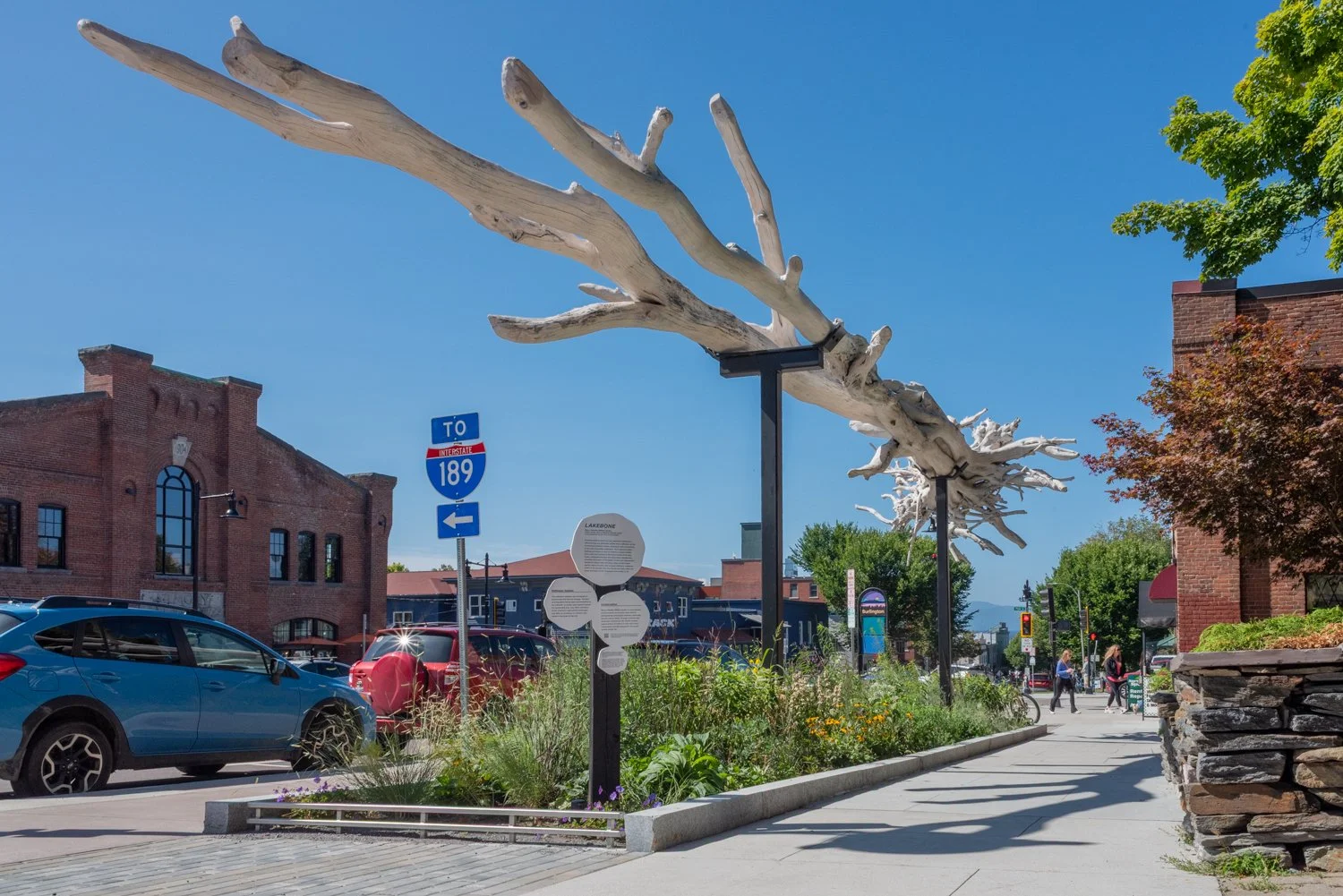
Floating between earth and sky, Lakebone transforms a full-sized tree and pollinator habitat into a reflection on the connections between forests, waterways, and communities in the Lake Champlain watershed. The sculpture evokes Burlington’s history as one of America’s busiest lumber ports while also looking to the future health of the lake. Today, sustainable forestry and watershed management, including the restoration of floodplain forests and maintaining deadwood along rivers and lakes, help protect water quality, reduce erosion, provide habitat and increase resilience. Lakebone invites us to consider how the choices we make today will shape the future of the waterways that sustain us all.
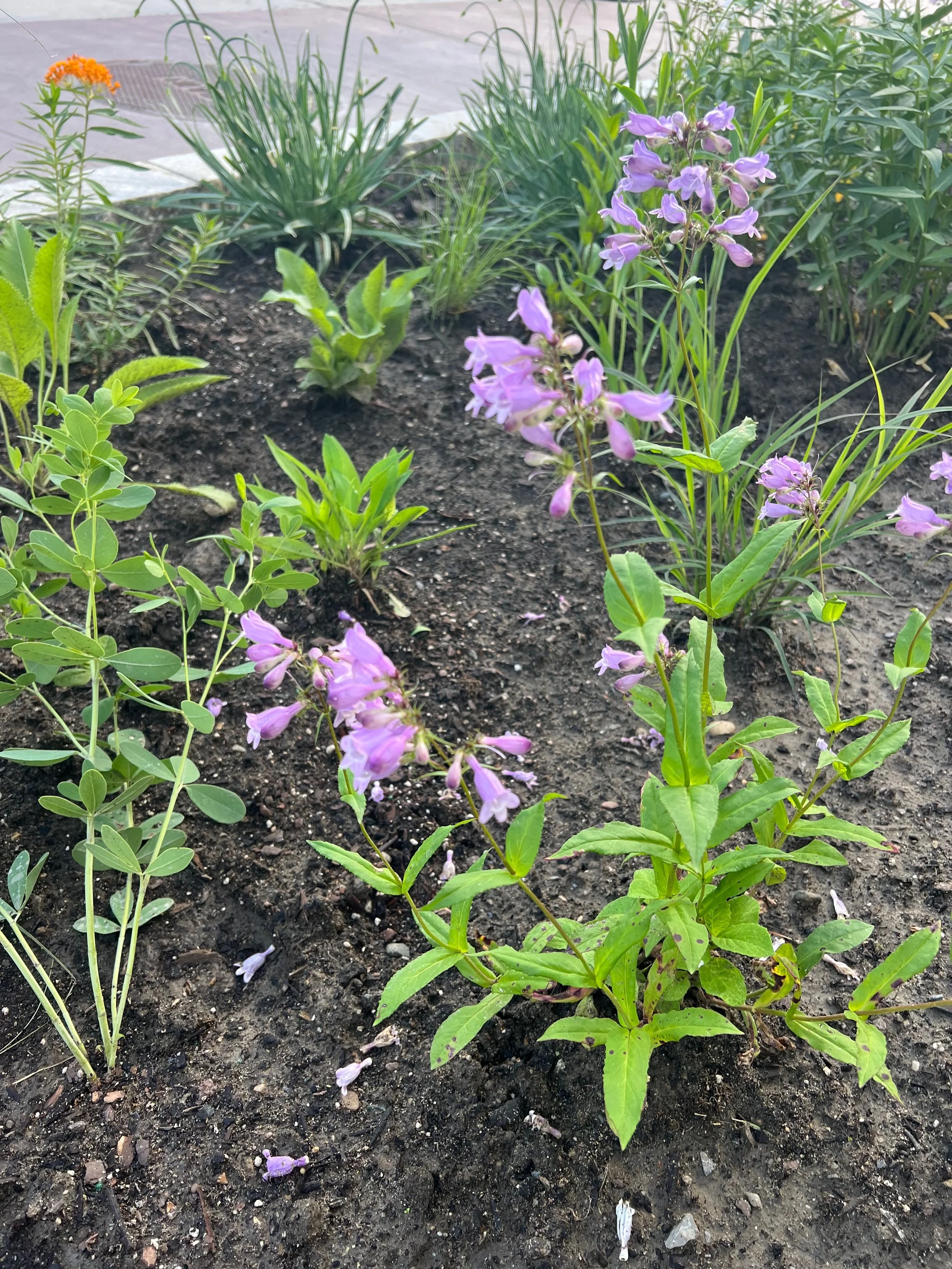
The pollinator friendly habitat below Lakebone is designed and installed by Bee the Change. With grasses and flowers the sidewalk comes alive and buzzing with pollinators. This restoration of the hardscape of the streets of Burlington is an important part of the stormwater mitigation by becoming a rain garden with long perennial roots.
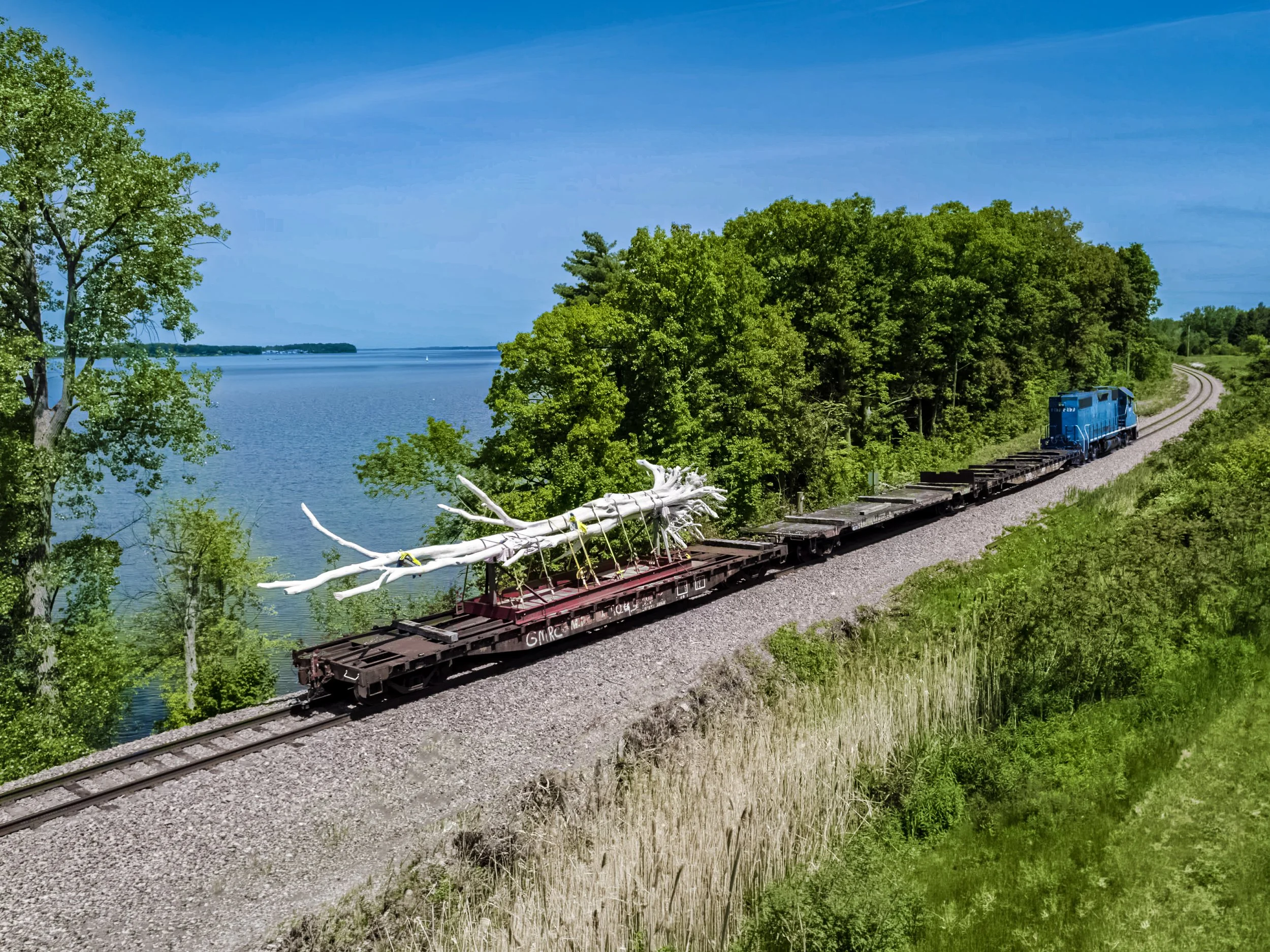
Transportation to Burlington included a train ride from Vermont Rail Systems. PC Kevin Burkholder
PRESS
“A ghostly white, starkly beautiful 48-foot tree…a triumph of planning and teamwork.”
-Alice Dodge,
Seven Days Vermont
Carbonate Media
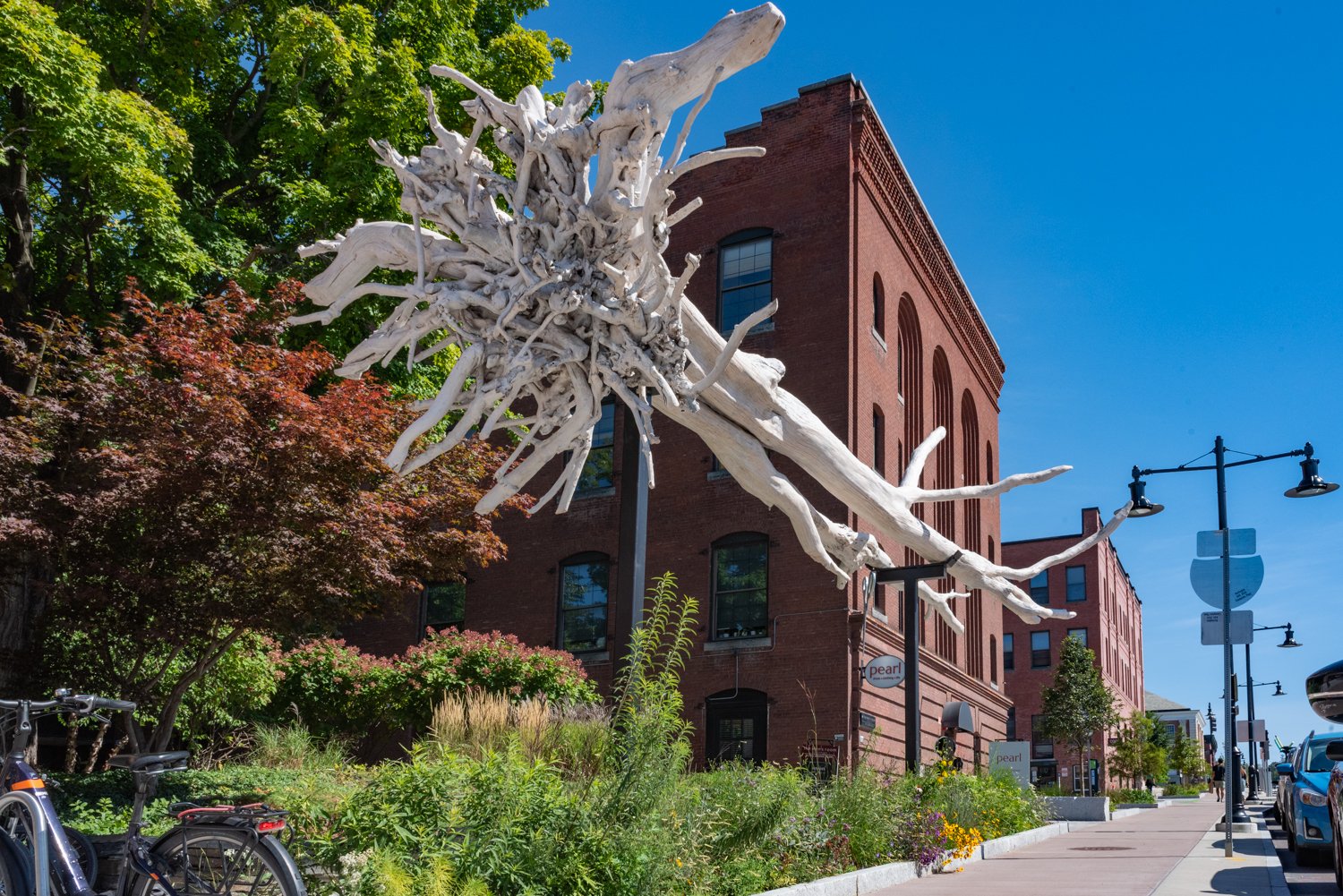
PC Renee Greenlee
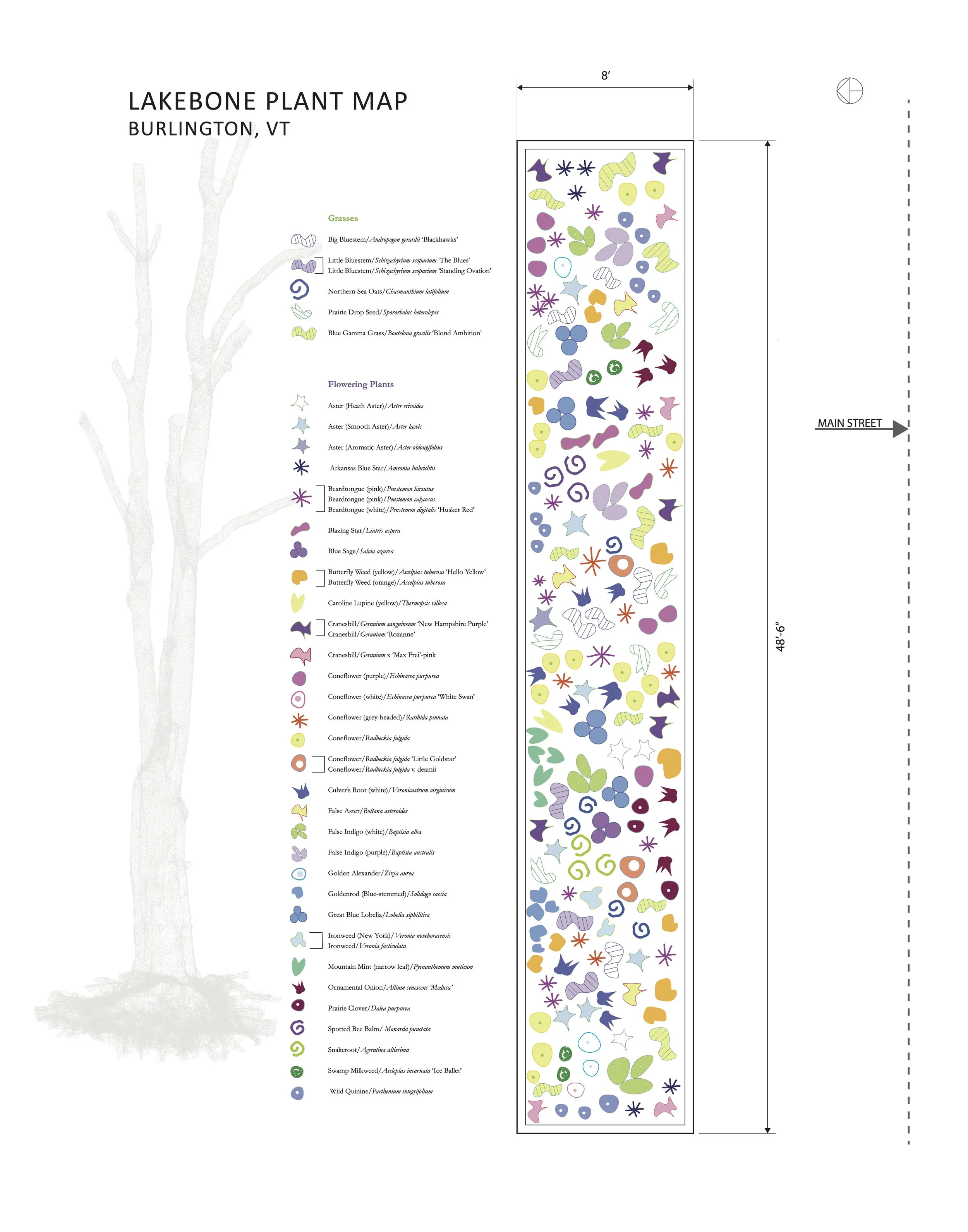
Plant Map of Bee the Change design by Lorna Loy
As part of Nancy Winship Milliken Studio, the CREATIVE CONSERVATION COLLABORATIVE merges art with environmental conservation. We partner with communities and local organizations to create site-specific, sustainable sculptures and landscape restorations that transform how people connect with nature.
Lakebone is rooted in environmental responsibility. We are proud to partner with two vital Vermont environmental organizations for Lakebone. Explore their work and engage with them in links below:
The Vermont Pollinator Working Group (VPWG) protects regional bees and pollinators through collaborative projects in agriculture, research, policy, and conservation.
Lake Champlain Committee (LCC) Since 1963, this membership-based nonprofit has worked to restore water quality, safeguard natural habitats, and foster stewardship across the basin through science-based advocacy and community education.

Carbonate Media
THANK YOU
This installation is part of the City of Burlington’s Great Streets: Main Street Project and represents an extraordinary collaboration between artists, engineers, fabricators, transportation specialists, environmental partners, and community supporters. Special thanks to Clemmons Farm, who collaborated to identify a tree on their historic farm already slated for removal and donated to the artist in memory of Dr. Jackson Clemmons and Mrs. Lydia Clemmons. Additional thanks to Vermont Rail System, S.D. Ireland, Artisan Engineering, Industrial Four, Teachers Tree Service, Anthony and Associates, BFG designs, Logic Engineering Associates, Talbert Outdoor Maintenance, Building Heritage, and the many partners who helped make this ambitious public artwork possible. The ease of collaboration and teamwork with Burlington City Arts was an artists dream to bring this installation to Burlington.